


Why Calgary's Freeze-Thaw Cycles Make Professional Hardscaping Worth the Investment
September 21, 2026
Why Calgary's Freeze-Thaw Cycles Make Professional Hardscaping Worth the Investment
Calgary experiences 50 to 100 freeze-thaw cycles every year. That constant expansion and contraction in the ground is what breaks cheap or improperly built hardscaping apart. Professional installation accounts for base depth, drainage, and material selection before a single stone gets laid. Done right, a patio, retaining wall, or outdoor living space in Calgary can last 25 to 30 years or more.
Introduction
It's fall in Calgary. The nights are soon to drop below zero, the leaves are turning, and if you've been thinking about your yard, this is the season most people start planning ahead.
Here's the thing about hardscaping in Calgary: the climate gives you no slack. What looks solid in June can start shifting, cracking, and separating well before the warranty on a budget install runs out. Once the ground has moved, fixing it costs nearly as much as doing it right the first time.
This post breaks down exactly what Calgary's climate does to hardscaping, what separates a two-year patio from a 25-year one, and why fall is the best time to get your project on the calendar.
Wondering what a full hardscape transformation costs in Calgary? See our complete cost breakdown.
Table of Contents
- What Calgary's Freeze-Thaw Cycles Do to Hardscaping
- Why Cheap and DIY Hardscaping Fails in Calgary
- What Professional Hardscaping Actually Looks Like
- The Materials That Hold Up in Alberta Winters
- What You Actually Gain from Doing It Right
- Why Fall Is the Time to Plan, Not Spring
- Frequently Asked Questions
What Calgary's Freeze-Thaw Cycles Do to Hardscaping
Most people think about freeze-thaw as a surface problem. It's not.
When water gets into the ground and freezes, it expands with enough force to lift concrete slabs, shift paving stones, and push retaining wall blocks out of alignment. Then it thaws, contracts, and settles. Slightly differently than it was before. Repeat that 50 to 100 times a year, which is a normal Alberta winter, and you start to understand why some patios look like a jigsaw puzzle after three seasons.
The technical name for this is frost heave. It's the single biggest cause of hardscaping failure in Calgary, and it happens almost entirely below the surface in the base layer, long before any damage shows up above.
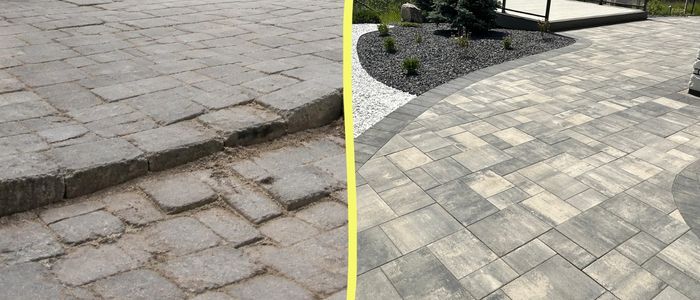
What makes Calgary particularly challenging is the soil. Much of the city sits on expansive clay, which holds moisture and magnifies freeze-thaw movement far more dramatically than sandy or loamy soil. Daryl Bouchard has been building hardscapes in Calgary for over 20 years. He'll tell you plainly: the ground here is unforgiving to anyone who skips steps in the base.
Why Cheap and DIY Hardscaping Fails in Calgary
The price gap between a budget install and a professionally built hardscape is real. But what you're actually paying for with the professional price is the part you'll never see: the foundation.
Here's where most cheap installs and DIY projects cut corners, and why each one leads to failure in the Calgary climate.
Not Enough Base Depth
In Calgary, a properly compacted aggregate base for a patio or walkway needs to reach 8 to 12 inches deep to sit below the frost zone. Budget crews often lay 3 to 4 inches. The paving stones look identical on day one. By year three, you've got uneven sections, cracked edges, and joints that have opened up enough to let water in and start the whole cycle over again.
No Drainage Plan
If water can't get away from your hardscape, it collects in the base. When it freezes, it heaves. Professional installs are graded and sometimes include a dedicated drainage layer to pull water away from under the structure before it gets the chance to freeze.
Missing Geotextile Fabric
A layer of landscape fabric between the native soil and the aggregate base keeps soil from migrating up into the gravel over time. Without it, the base material eventually contaminates, compresses unevenly, and fails from the inside out.
Wrong Materials for Alberta
Not all paving stones and natural stone products perform the same in freeze-thaw conditions. Products with high absorption rates take on water, freeze from the inside, and spall. Professional installers specify materials rated for Alberta's climate from the start, not after the fact.
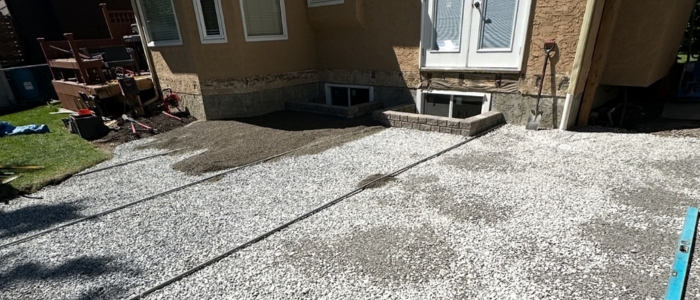
If you've had a patio shift, crack, or heave after a hard winter, that's almost always a base problem. Not bad luck.
What Professional Hardscaping Actually Looks Like
A full design-and-build project with Western Elements starts well before a stone gets laid.
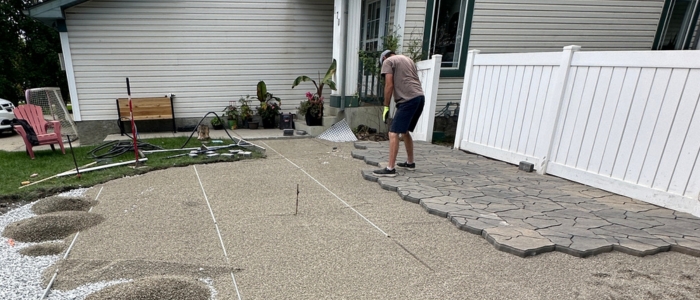
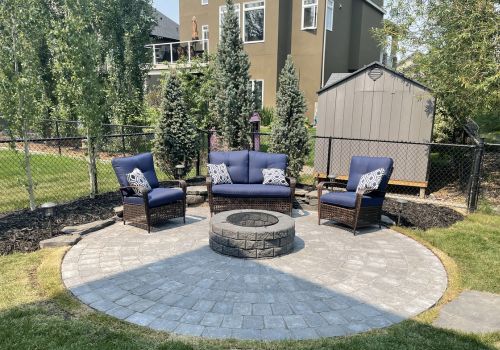
Daryl walks the property first. He reads the drainage patterns, assesses the soil, and maps the grade of the yard. Then comes excavation. For a Calgary patio, that typically means digging 12 to 16 inches down to account for the base and bedding layers. The aggregate base goes in and gets compacted in stages, each layer packed tight before the next one goes on top. Geotextile fabric is laid down. Edge restraints are set. A bedding layer of concrete sand is graded. Then the surface material is set, levelled, and locked in with polymeric sand.
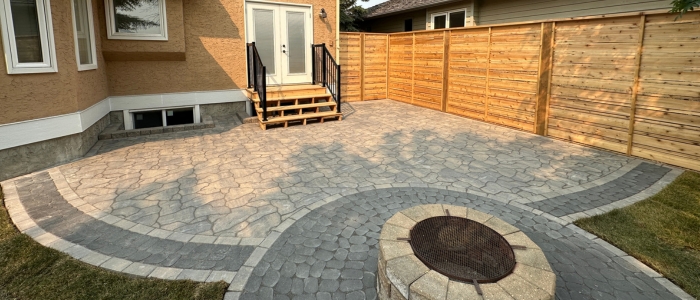
That entire system is built to move as a unit through Calgary's freeze-thaw cycles, rather than shifting piece by piece. When it's done right, the surface stays flat, the joints stay tight, and you're not thinking about that patio again for 20 to 25 years.
That's the difference between hardscaping that looks like part of your home and hardscaping that looks like a project.
The Materials That Hold Up in Alberta Winters
Not every beautiful stone product belongs in a Calgary climate. These are the materials Daryl trusts for freeze-thaw durability.
Premium Concrete Pavers
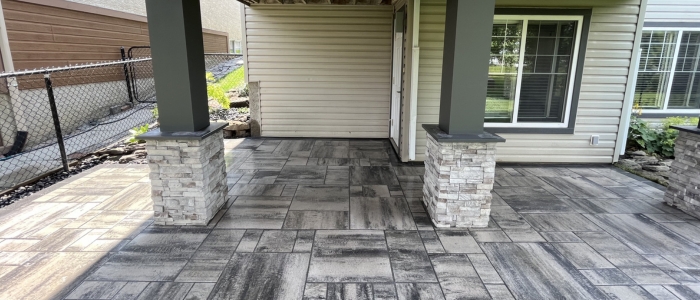
Dense, low-absorption pavers are the workhorse of Calgary hardscaping. They're dimensionally consistent, hold their colour, and on a deep compacted base they'll go decades without cracking or spalling.
Natural Flagstone
Thick-cut natural flagstone, particularly granite and quartzite, performs well in Alberta winters. These stones are low-porosity, shed water readily, and don't absorb enough moisture to be vulnerable to freeze-thaw cracking from the inside. See how natural stone works in Calgary yards.
Armour Stone and Natural Boulders
For retaining walls, large-format natural stone handles earth pressure and frost conditions well. Stacked with a drainage bead behind the wall, it won't bow or tip from hydrostatic pressure after hard freeze cycles. Learn more about retaining walls and large-scale hardscaping in Calgary.
Polymeric Sand
Surface joints are a weak point when done wrong. Polymeric sand is flexible enough to handle minor movement without cracking open, which keeps water out of the joint and the base beneath it throughout the winter.
What You Actually Gain from Doing It Right
Here's what a properly built hardscape gives you beyond durability.
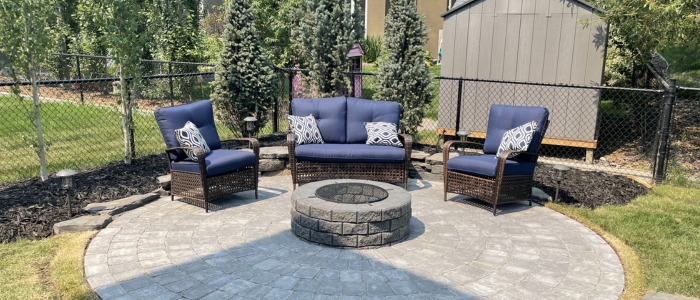
It gives you space you actually use. A patio that's level, dry, and intact from April through October is a fundamentally different yard than one you're avoiding because the surface has shifted or the retaining wall is starting to bow. The yard becomes part of the house. Morning coffee outside. Evenings with people over. Kids on a surface you're not second-guessing. That's what a design-and-build project actually delivers. Here's why Calgary homeowners consistently say quality landscaping is one of their best investments.
There's a financial case too. Professionally built hardscaping adds real property value. A well-designed outdoor living space can return 60 to 80 percent of its cost, which compares well against most interior renovations, and it never needs to be torn out and redone because it was built for the climate it lives in.
Why Fall Is the Time to Plan, Not Spring
Most people think of spring as the start of landscaping season. It is, for the work. But fall is when the decisions get made, and that timing matters more than most homeowners realize.
When spring hits Calgary and the ground thaws, every reputable contractor's calendar fills within weeks. The homeowners who planned in the fall are first in line. The ones who start calling in April are often looking at a late summer or fall start at best.
There's a practical side to fall planning too. Daryl can walk the yard while the ground is soft, read the drainage from the fall rains, and give you a more accurate picture than a spring walkthrough on frozen ground. You get a better plan and a tighter quote. Not sure where to start on a larger project? See how to phase a Calgary landscaping build.
Daryl still has a small number of project slots available before the season closes. If you've been thinking about a patio, retaining wall, or a full backyard transformation, now is the time to get on the calendar.
And if your vision is bigger than a single season, Daryl is already booking design-and-build projects into next year. Getting in now means priority scheduling when the ground opens up in spring and the calendar starts filling fast.
Conclusion
Calgary's freeze-thaw cycles aren't going anywhere. The ground will keep moving every winter, and hardscaping that wasn't built for it will keep showing the damage.
A professionally designed and built outdoor space is worth the investment, not just because it lasts longer, but because it actually works. It stays flat. It stays beautiful. It becomes part of how you live in your home instead of a repair project on the back of your list.
Western Elements Landscaping has been building hardscapes in Calgary for over 20 years. If you want something built the way the climate demands, get in touch with Daryl directly and let's talk about what your yard can become.
Daryl has a few spots left before the season closes, and he's already booking projects into next year. Don't wait until spring and find yourself at the back of a long line.
Book your free Calgary site visit today.
Frequently Asked Questions
How many freeze-thaw cycles does Calgary experience each year?
Calgary typically goes through 50 to 100 freeze-thaw cycles per year. The city's continental climate means temperatures cross the freezing mark repeatedly throughout fall, winter, and early spring, which is significantly more than many other Canadian cities. That's one reason why proper base preparation is so critical here.
Why does my Calgary patio crack after a few winters?
Most cracking comes down to insufficient base depth and poor drainage. Without 8 to 12 inches of compacted aggregate below the surface material, frost heave has nowhere to go but up. Water that pools under the patio freezes, expands, and lifts sections unevenly. Once that movement starts, the surface cracks and joints open up.
What's the best hardscaping material for Calgary winters?
Dense, low-absorption concrete pavers and thick-cut natural stone like granite or quartzite are the most frost-resistant options. Both shed water rather than absorbing it, which limits the freeze-thaw expansion that destroys porous materials from the inside. The base and drainage system matter just as much as the surface material, though.
Is fall a good time to install hardscaping in Calgary?
Installing late in the season depends on timing and temperature. But fall is always a good time to plan. Contractors are less booked, site visits are easier, and locking in your project before spring means you're first on the calendar when installation season opens.
How long does professional hardscaping last in Calgary?
A properly designed and built patio, retaining wall, or outdoor living space in Calgary should last 20 to 30 years with minimal maintenance. The key variables are base depth, drainage design, and material selection. Projects that cut corners on any of those three typically need significant repairs within 5 to 10 years.
How much does hardscaping cost in Calgary?
Hardscaping costs in Calgary vary based on scope, materials, and site conditions. A standard patio runs from roughly $8,000 to $20,000. A full outdoor living space with multiple features, retaining walls, and custom stonework can range from $30,000 to $80,000 or more. See our full Calgary outdoor living space cost guide for a detailed breakdown by project type.
Table Of Contents
What Calgary's Freeze-Thaw Cycles Do to Hardscaping
Why Cheap and DIY Hardscaping Fails in Calgary
What Professional Hardscaping Actually Looks Like
The Materials That Hold Up in Alberta Winters
What You Actually Gain from Doing It Right
Why Fall Is the Time to Plan, Not Spring
Frequently Asked Questions
Check out other blogs
Read More of Western Elements Landscaping's blogs!
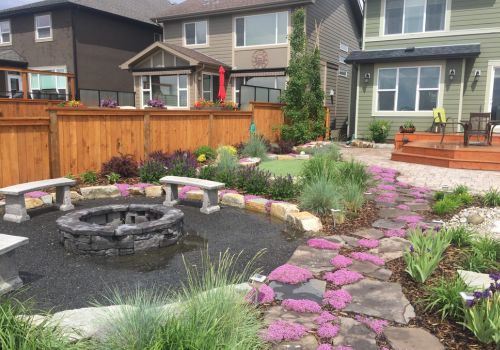
How to Phase Your Calgary Outdoor Living Space (Get Your Dream Yard Without Doing It All at Once)
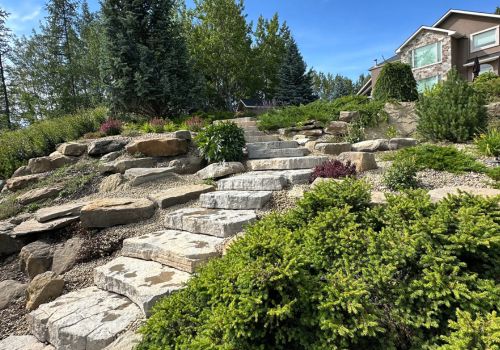
Natural Stone Landscaping in Calgary: Boulder Walls, Flagstone Patios, and Moss Rock
How to Design a Calgary Outdoor Entertainment Space You'll Actually Use All Summer

